The Cybersecurity Poverty Line: Why SMBs Remain Vulnerable
Guidance for Small Businesses
Small and midsized businesses (SMBs) often perceive cybersecurity as a luxury rather than a necessity, inadvertently placing themselves beneath what I call the “cybersecurity poverty line.” This invisible threshold separates organizations with mature, layered defenses from those struggling to implement basic protections. With limited budgets, overstretched staff, and tight timelines, many SMBs assume they’re too small to attract hackers. Unfortunately, that assumption is flawed—and dangerous. Ignoring security isn’t just a technical oversight; it’s a failure in business risk management.
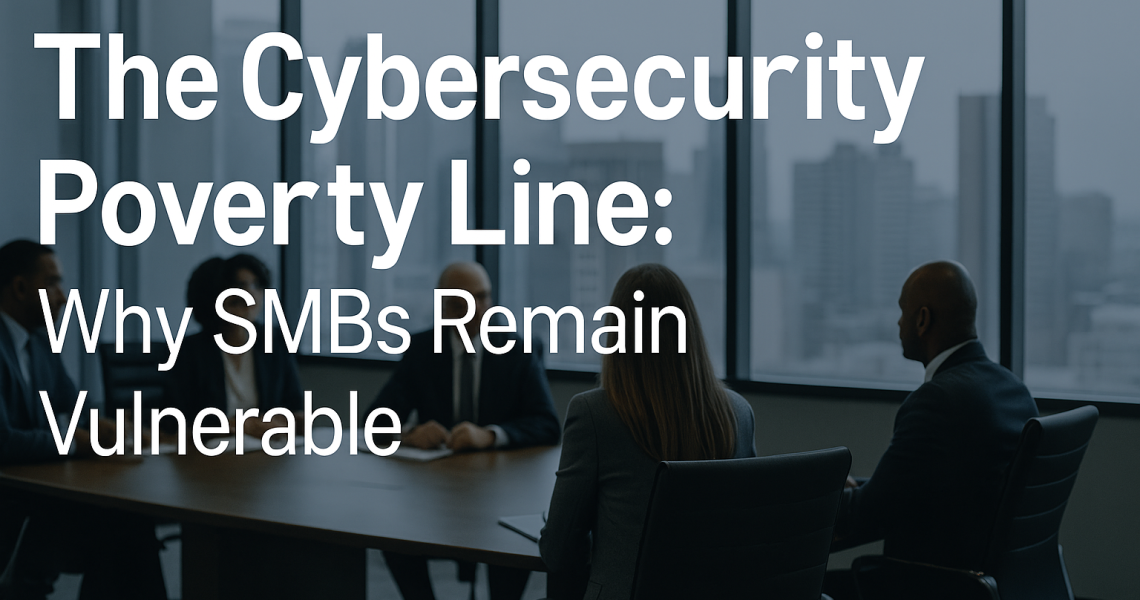
The SMB Security Funding Gap
SMBs account for 99% of all businesses in the U.S., yet their cybersecurity investments don’t reflect the scale or importance of their operations. According to a 2023 National Cyber Security Alliance survey, nearly half (46%) of small businesses reported experiencing a cyber incident within the past year. However, only 14% said they were “very confident” in their ability to recover from such an event. This disparity highlights a profound security gap—one exacerbated by underinvestment, misaligned priorities, and a false sense of safety.
While enterprises benefit from dedicated CISOs, in-house SOC teams, and robust budgets, SMBs often allocate security dollars reactively—usually after an incident has already occurred. This leads to critical weaknesses in areas like patch management, endpoint protection, cloud security, and incident response readiness. Attackers know this and increasingly target smaller organizations, knowing they’re less likely to detect or respond effectively.
Human Capital and Expertise Constraints
Even when SMBs want to improve their security posture, they often encounter a more human problem: staffing. Most small businesses don’t have the luxury of hiring cybersecurity specialists. Instead, they rely on generalist IT staff juggling multiple responsibilities—from help desk support to network maintenance to compliance. These professionals are often talented and well-intentioned, but stretched too thin to focus meaningfully on security.
This lack of specialized attention leads to gaps in coverage. Phishing emails get through because no one’s tuning the email filters. Vulnerabilities remain unpatched because no automated management system or staff member oversees them. Logs go unanalyzed, suspicious behaviors are missed, and incident response plans sit on shelves—if they exist at all.
Security isn’t just about buying the right tools; it’s about having the right people and processes in place to use them effectively. And that’s where many SMBs struggle—not out of neglect, but from a lack of capacity.
Practical “Poverty Line” Closing Tactics
Here’s the good news: Security maturity is achievable without breaking the bank. Practical, cost-effective strategies can help SMBs bridge the cybersecurity divide.
- Prioritize low-hanging fruit: Focus on basic yet high-impact controls like enabling multi-factor authentication (MFA), segmenting networks, and implementing least-privilege access. These controls significantly reduce attack surfaces and mitigate lateral movement within networks.
- Leverage open-source tools: Solutions like OSSEC (for intrusion detection), OpenVAS (for vulnerability scanning), and pfSense (for firewalls) provide enterprise-grade capabilities without licensing fees.
- Use SOC-as-a-Service: Managed detection and response (MDR) vendors offer 24/7 monitoring, alerting, and guidance—bringing enterprise-level visibility to smaller teams without the overhead of building a SOC.
- Partner with academia: Local universities often welcome collaboration. Launching internship or capstone programs provides mutual benefit: students gain experience, and SMBs gain affordable support while nurturing the next generation of cybersecurity talent.
- Think risk-based, not checklist-based: Avoid trying to “lock everything down.” Instead, categorize assets by business value, assess their threat exposure, and deploy controls accordingly. For instance, a customer database or payment processing platform should receive far more protection than a public-facing blog.
Embedding a Cyber-Aware Culture
Technology alone won’t solve the problem. Security must be woven into company culture—from the executive suite to the front desk. Employees are the first and last line of defense, and their behavior matters.
- Run phishing simulations: These help train users to spot red flags in emails and reinforce vigilance.
- Host cyber “huddles” or lunch-and-learns: Short, informal sessions discussing current threats or lessons learned from incidents can raise awareness and encourage questions.
- Distribute regular updates: Simple, digestible tips in newsletters or Slack channels keep security top-of-mind.
Cybersecurity culture isn’t built through fear or shame—it grows through education, inclusion, and continuous conversation. Even something as simple as a coffee-break discussion about a weird email can lead to teachable moments and improved hygiene.
Beyond Perfection: A Path to Resilience
Too many SMBs believe that unless they can afford comprehensive security suites, it’s not worth trying. This mindset only perpetuates vulnerability. The goal isn’t perfection—it’s protection that’s good enough to reduce risk, respond quickly, and recover confidently.
Start by prioritizing what matters. Focus on critical systems, adopt layered defenses, and empower your people. From there, you can iterate and improve over time. Security isn’t a one-time fix—it’s an ongoing journey of maturity.
Final Thoughts
The cybersecurity poverty line doesn’t have to be a barrier. It can be a benchmark—a way to identify where your business is today, and what practical steps can elevate your defenses. With intentional investment, creative partnerships, and a focus on culture, SMBs can transform themselves from easy targets into resilient defenders.
Related Posts
What Health Tech Startups Must Know About HIPAA and HITECH
What Health Tech Startups Must Know About HIPAA and HITECH Guidance for Small Businesses As

SOC 2 Type I vs. Type II Attestation: Guidance for Small Businesses
SOC 2 Type I vs. Type II Attestation Guidance for Small Businesses As a fractional
ISO 27001 vs. SOC 2: Which Is Right for Your Small Business?
ISO 27001 vs. SOC 2 Which Is Right for Your Small Business? Small businesses are